
Posts Tagged ‘france’

January 07, 2013 by miles
1 Star2 Stars3 Stars4 Stars5 Stars 1 votes
Loading ... Loading ...
Gate is actually the basis of the Vaux Logo

Gate is actually the basis of the Vaux Logo

Despite focusing most of my writing efforts on my blog, and keeping up with the world via my twitter the year-end letter to Vaux angels is a tradition well worth continuing. I’ve cribbed the best of it here…

 Discover. Develop. Deliver.

These three words are scrawled across everything I do for Vaux. They are three parts of my personal mission to success as entrepreneur and angel investor, which I had the honor of mapping out in a 2012 white paper for the Family Office Association  “Angel Investing for the Family Office” . I took a hard look at the process of building a foundation on the long journey from inception to exit, and nowadays I plan my week based on these categories. I color code each meeting in my outlook. They might as well be scrawled on my bathroom mirror in lipstick. They are the cycle of life for Vaux les Ventures and the angels that have supported these endeavors for nearly 10 years. Here’s what these simple words mean to me:

Discover is about being very focused on what you can do well, and what markets will have an impact that can generate angel returns. Big market trends that people don’t yet see, or are unwilling to accept. Trends that will obviously converge, but no one knows exactly when. It means being early and brave, but it also means being patient to find the right mix that can sustain the long march. This is where the DNA of the business is set: habits formed early are virtually impossible to break. Many people in the business call this “deal flow”, and I did too for a while but I soured on the term as too many IB ‘s and VC’s (both of which I have been) over-use it. Having a well know criteria for how to invest and who to invest with seems to do very well in attracting the right types of people. So does being a good guy. But it’s about discovery as much as it is about network. And that discovery includes markets and their real problems as well as solutions and the best team to build them.

A recent example of this would be my work on WellAware, the mobile health solution. I’m as committed as ever to the trend of mobile devices having profound affect on health and wellness. And I truly believe that very simple data can have tremendous impact on lives. The Wellaware team did a tremendous job developing the platform for this theory to play out, but certainly overshot the MVP standard. What we need in 2013 is more cycles with large user bases to refine our solution, likely in the mobile environment.

Develop is where the entrepreneur (in anyone!) takes over: translating a vision for a product solution into a product itself, and testing it with users to see if the darn thing works. It takes tremendous amounts of courage, persistence and luck. Some attempts are ridiculously off the mark. Ironically, more often there are overshots than undershots when going for the minimally viable product. And users are rarely the viral dream everyone hopes for- more like a block-by-block struggle to get to a vantage point where people notice you. But more than product and users, the team is the big part of the develop picture. Entrepreneurs have a passion for building things are not always Schwartkoffs when it comes to leading people. And that is where the coaching and mentoring foundation is laid. Capital begins to show up at this point, as we have baked enough of the risk out of the opportunity for larger sources of capital to begin to show interest. That too is a major challenge in this phase, and if you grow fast enough, it never ends.

[Major edits here from the angel letter. Sorry, that's not public.]

The poster child for the develop phase is certainly TrustCloud, which just 9 months ago had product solution in search of a problem, no user base, and a team that had already endured a few pivots. Such are the risks of being early! But the saving grace was each of the founders used the sharing economy and saw what it could deliver, as well as its limitations. Something had to give, we thought.

And 2012 was full of such breaks, as TrustCloud found its core team, delivered a product and began building users at an impressive clip  (10x from July to December) after the Wall Street Journal picked us up. Check out the product here, or the very impressive Facebook TrustCloud user group (which tracks bugs and promotes the product passionately). The Company rolls into the New Year with a new Peer Protect insurance product to couple with it’s ever growing number of sharing networks.  Kudos to the indefatigable and imminently coachable CEO Xin Chung, who details the year here:

 I shared keys to my NYC apartment on Airbnb, rides through San Francisco in a Sidecar, and my workload with TaskRabbits. I’m not alone– people worldwide are sharing more than ever with millions of room-nights booked, cars rented, and dogs walked by reputable strangers. The movement is called The Sharing EconomyCollaborative Consumption, or as Mary Meeker calls it, living Asset Light(this is a great read! Don’t miss it!)

 Flush with VC funding, the movement scaled fast in 2012– but not without growing pains: A quick look at recent sharing history would give anyone pause before sharing with a stranger. Home sharing market leader Airbnb had a redux of its 2011 EJ incident with the so-called airbed & brothel snafu where a Swedish apartment was literally pimped-out. Carsharing had it’s own collisions with the luxury carsharing service HiGear shutting down due to thefts, car sharer RelayRides’ liability issues with a fatality crash, and regulatory fines for on-demand ride-sharers.

 These events highlighted that trust between strangers in peer-to-peer marketplaces must keep pace with their own rapid growth. In the offline world, hotels have long adopted star ratings, rental cars are licensed and insured by brands spend billions to give consumers confidence to buy. Since online, peer to-peer marketplaces powered by micro-entrepreneurs don’t have time to brand themselves or vet strangers, they are much less efficient as buyers and sellers waste time sizing each other up, figuring out a schedule and even haggling over price before committing. Trust can make these transactions much faster, and insuring the risk is something we look forward to. Read more at TrustCloud’s Blog.

Deliver is where all the hard work pays off. That would seem like a triumphant moment, and I’ll allow myself a few. But as I have matured it has become a little more bittersweet. Here are companies we have built from scratch, communities that started with a handful of people, angel capital that came in for under $1M pre money. And despite some intermittent liquidity opportunities, in some cases these companies have futures that remain bright(er). We have seen large that we turned down; we may see 2x-3x-4x from here (or of course, we may not). So parting with some or all of the ownership isn’t as easy as “see ya later”. It’s an asset, with a value that has to be managed detachment that is at arms’ length, hard as that may be. We also live in a world of high risk, so those precious few windows of liquidity opportunity have to be considered when they are open.

[More major edits here from the angel letter. Sorry, that's not public.]

In summary, I guess I feel every venture I have been involved with has contributed to the next. Things I have learned about the Discover phase have allowed for better Develop results. Those few short peeks at liquidity in Deliver have been viewed with a paradigm that allows the whole group to consider individualized risk and reward before deciding on liquidity. And of course, the success through the process has allowed us the opportunity to feed the beast, return to what we do best, and further diversify with another opportunity.

I am extremely grateful for the opportunity to work in the field that I do, side by side with talented entrepreneurs, backed by caring and value adding angels that ask good questions and have the patience to help realize the vision I had almost ten years ago. We’ll see great opportunities in each of the three key Phases in 2013. Drop me a line and we’ll discuss which ones best fit your criteria in the days ahead.

All my best in the New Year,


November 26, 2012 by miles
1 Star2 Stars3 Stars4 Stars5 Stars 1 votes
Loading ... Loading ...

Twinkies

Only in America would people violently trample each other for discounts, exactly one day after being thankful for what they already have.

@brett summed up the supreme irony of America today. A country sublime in its ability to innovate, to produce and to lead nevertheless has faulty brakes when it comes to how to apply those resources. In a Tocqueville kind of way, I like using the French as a sounding board for how much is enough. My experience has always been that the French are huge fans of America, and genuinely want us to do better in the family of nations. Like an older brother that has learned a few lessons in growing up as a nation (and losing it’s world dominance in the process) I’ve always thought of France and the French as friendly nation-mentors. Hey, any culture that once supported a king with 10,000 rooms in his house would be experts at judging excess.
I’ve also worked tirelessly this year on the Sharing Economy, trying to help foster a community that is more self aware of consumption and looking for ways to utilize assets more effectively. Yes, Collaborative Consumption is green, and fits well with GenXY, but it also is a good solution to curtail waste. Many think Collaborative Consumption could be as big as the industrial revolution. Some of the best voices in the space come from Paris, in the work on OuiShare and Mutiniere.
For the past 10 years, roughly after 9/11, my friends in Paris would list this as one of few faults of Americans; conspicuous and constant consumption. Probably got us in a lot of trouble. But surprisingly it’s not often the shopping and debts that they point to. Here’s what they generally say:

Consumption of calories.

The Twinkee headline this week got me thinking about, with all our bounty we are unable, unwilling or incapable of  governing our intake.  Look, 150 calories of processed corn syrup won’t kill anyone in one sitting. But who in America eats one? And who does it just once. This food group has been a best seller in America for a generation. Later in the week, another caloric orgy takes place; It’s hard to believe, perhaps, that the average American Thanksgiving meal equals 3,000 Calories That would mean a 160 lb. person would have to run at a moderate pace for four hours, swim for five hours or walk 30 miles to burn off a 3,000-calorie Thanksgiving Day meal. Most do not.  Trying to work that off with the halftime football toss is as futile as try to get warmth from the slanting sun as the ball flies through a deep winter sky.

Consumption of natural resources.

How much gasoline does the United States consume? 1.18 gallons per person per day, every day. This figure includes every man women and child, (only 89% have licences, and about half of them in my neighborhood deserve to be retested regularly). 33 Gallons a month, enough to drive a little less than 1,000 miles on any of our great highways for the princely sum of about $4.00 per gallon. In France, that would run you about $10.00 per gallon, which is a) realistic , b) forces conservation, c) reduces the number of escalades tooling around in Paris. Add that to the amount of plastic we consume (another pertro-product) and you have the makings of a genuine addiction.

Consumption of Media.

The one that bothers me the most, and demonstrates the worst lack of self control is couch potato TV time: 2.5 to 2.9 hours per day. Worse as you get older. I’m not sure if this accounts for time spent on other screens like tablets and phones. I doubt it, and I will concede that at least most of that screen time is spent learning, communicating and socializing (in a mild form). But almost 3 hours per day in front of  the TV tells me people need something better to do.

So, the point is this: if even the French can point it out (and do so with empathy) it must be pretty obvious. If we can spend a little more time being thankful for what we have, consuming in more reasonable proportions, and buying and wasting a little less of what we don’t really need… we’ll be a little better off.

Giving up Twinkees is a good start.

November 11, 2012 by miles
1 Star2 Stars3 Stars4 Stars5 Stars 1 votes
Loading ... Loading ...

This is a popular post from my prior blog, revived for Miles to Go…I originally called it Herbert Sharpless Spencer and the 1,400 mile crawl across France. It’s true testament to the family traditions of gritty determination, hyperbolic story-telling, and wandering around aimlessly in the French countryside.

Legends die hard in the Spencer family, especially when they are based oceans away and told by grandparents that are beyond questioning. A trip through the French countryside with my father clarified a lot, and embarrassed no-one.

don't mess with my legends...Herbert Sharpless Spencer grew up in a coal mine in central Pennsylvania, as this was all that was left by our forebears. By the time he was of an age he could lie about his age, he volunteered for what appeared to be a much cushier job: rifleman in the US Army’s Big Red One commanded by General Pershing. His proficiency hitting squirrels (for dinner!) at 50 yards with a .22 rifle qualified him for the job, no doubt. Compared to the strip mine, it must have seemed like a nice trade. Obviously never out of the county- let alone the country- Herbert arrived in St. Malo, France in 1918 and was promptly sent to the Argonne Forest to an area called St. Mihiel, where the Germans had been terrifying the French by their proximity to Paris. (Actually, :30 by car for us, but we were flying.) It was warfare at its worst, stagnant lines of barbed wire and trench lasting for tens if not scores of miles uninterrupted.

So Herbert is in France for not longer than a week, stationed in St. Mihiel for not much longer than a few days. He hears the all clear, rises out of the trench, and promptly takes four bullets in the legs, losing one completely and seriously maiming the other. He is given up for dead. But, of course, he isn’t. By his telling, despite what must have been excruciating pain, he bound his (last) leg with his shirt, fashioned two crutches out of fence posts and started walking as best he could.

He finds a stream, drinks profusely from the collapsible army issue cup (now a Spencer talisman) and somehow finds the will and strength to save himself. Powerful force, that self-preservation. Downstream, he happened upon a farm house, and mustered the nerve to knock on the door. It opened, and he came to a tough realization: he spoke no French. True to form, the woman spoke no English, and shut him out. I’ve been treated rudely and felt out of place in some far away places in my life, but nothing like that. And no, the French aren’t usually that bad. But Herbert kept walking to a monastery he called St. Michel and somehow pulled through.

I had been to St. Michel a few times, on the Normandy coast a few hours drive outside Paris. I had shared those experiences with my Dad, and was able to bring him there recently with my publicist Greg and his Dad Paul. The place is glorious, as I imagine has been for 1,000 years. It’s also too far for a recently maimed rifleman to crawl to if he starts from the Argonne forest, even if he did start in 1918. My dad came to this conclusion on his own. “Perhaps there’s another St. Michel”, I suggested. this musta been the place

We spent the next week looking, with stops at the beaches of Normandy and the streets of Paris, just the four of us finding precious experiences together and generally enjoying ourselves immensely. (view short film). The culmination was our journey was the Argonne Forest and a field outside a town called St. Mihiel where 86 years prior my grandfather was shown no great respect by a German machine gunner. After a picnic (Dad is now a pate aficionado) on the banks of the Meuse where Herbert may well have dipped for drink we made our way into town to inquire about. It was a sleepy place, not to much changed from back in the day, I imagine. We were directed toward the old town, where amongst classic French row houses and walled gardens, we discover a monastery. Apparently, it was the Army hospital during the war, and was adjacent to a wonderful church. The name, of course: St. Michel.

Herbert Spencer had crawled across town, not across France. But his wounds were real, as was his valor. I was moved to see his son and my father piece it all together. It was magic.

October 08, 2012 by miles
1 Star2 Stars3 Stars4 Stars5 Stars No Ratings Yet
Loading ... Loading ...

Good Knight

We recently took an investment from an angel who was graduated Cambridge and shared this tidbit:

One enterprising undergraduate examined the University statutes prior to an examination and discovered that all students sitting exams in full fusc are entitled to a glass of sherry. He demanded his due in the exam, and the University’s Proctors duly responded, before fining him one shilling for failing to wear his sword, allegedly also part of the archaic statutes. 

The point he made was, he fully expected that if I ever sat for an exam again I would cite a medieval code, perhaps in Latin, to set the playing field in my favor. I laughed it off at the time as a Frasier-Crane like idiosyncratic remark. But it got me thinking…

I have actually walked Temple Church in London, trekked the Crusader Castles from Syria to Jerusalem, visited the site of Jacque Demolay’s burning at the stake by King Philip IV, and never pass a chance to hoof through a cathedrale on any of my many visits to France. My family name is Norman French (the De Spencer meant warehouse manager, back in the day) and became English a bit after 1066 (lineage impossible to prove, or disprove). So if I wasn’t actually a Templar in training all these years, I certainly went through the paces. As per usual with Spencer’s, I did it without even knowing why.

Irony is, of course, none of these experiences hold a candle to entrepreneurship when it comes to having so many chances to do something with purpose, and to hone a craft in pursuit of that goal. There are so many risks to combat, so many people to inspire and lead, so many “bet the holy sites” decisions to be made every day I have come to rely on a basic code that I recite every day, and spend hours meditating on: my mission statement as taught to me by Steven Covey of Seven Habits. I have become a crusader for doing what is fair and best for the company and all its stakeholders while building enterprise value along the way. And I take it seriously enough to blank out everything else around me when I am engaged.

But to be honest, that’s about the only way to succeed in start ups today.

So what’s my point?  None really. I just consider start ups to be the great Crusader challenge of the 21st century.

I love what I do. And I have a sword. Touche’ BB


{EAV:7439ec7fe5805ac9}

05 September

Seriously, Syria?

September 05, 2011 by miles
1 Star2 Stars3 Stars4 Stars5 Stars 1 votes
Loading ... Loading ...

Errmm, all's well here...

The beatings will continue until morale improves…

That about sums up the Assad’s family strategy for dealing the outbreak of “Arab Spring” in Syrian towns as it continues into “who’s next to Fall, this Fall”.  I think it is a country worth keeping an eye on, though it is very difficult with limited social media permitted.

Fellow Americans know so very little about the little country wedged between Lebanon and Iraq. I know just enough to be dangerous: my trek through the country with Tad Jones gave us a very unique perspective and continues to be the influence for our singular effort to inform our kin with our in-development play, A Line in the Sand. As we’ve said before, the region may look differently if TE Lawrence used twitter. We have tried piecing together Syria’s history enough to understand its future. But we’ve only been noodling it for five years, while they’ve had centuries to create the puzzle. Here’s a few pieces:

First: Syria is a key domino in one of the four big tectonic changes that will define the next generation: access to oil. While they have little oil themselves, they have long been a keystone in the strategic interests of the region, crossing both ethnic and geographic ties. Many of the current conflicts in the region lead back to Damascus, one way or another: Baghdad, Tehran, West Bank, Golan, Beirut, Israel proper, the Palestinian question, etc. etc. The entire region has a long history of being tribal, and Syria has exploited those gaps for centuries.

(for the other three, and a lot more eloquent grasp of geo-politics, see Thomas Friedman and the world’s four ruling bargains): 1) The world’s oil tap is deposing its old regimes, 2) Europe is unravelling as PIIGS spend and Germans save, 3) China’s deliberately undervalued currency and export-led growth keeping the Communist Party’s in power by providing rising living standards, and 4) In America, a credit-consumption-led economy, whereby we maintained a middle class by using steroids (easy credit, subprime mortgages and construction work) and less muscle-building (education, skill-building and innovation).

Second: It’s strategic. because of this  position, the region has been fought over for centuries. Long before there was oil, there were the Crusades whereby the Catholic church essentially invented the jihad, IMHO. Teutonic Knights were promised eternal gratitude and absolution in advance for re-taking Jerusalem and slaughtering anyone that stood in the way. This generally meant Muslims. In support of the thousands that made their way to the Holy Land, huge logistical challenges were met as Hospitallers literally paved the path from France to Palestine with roads, castles, and supporting infrastructure provisions (and became rich in the meantime).  I have personally visited Krak de Chevaliers in Homs and I can attest to the awesomeness of the work as well as the brilliance of the positioning. It was clear the spot was very important and was not going to be given up easily.

Third: Syria is the ultimate state controlled, exterior influenced, family business. Bashar al-Assad is the current president, and was preceded by his father Hafez al-Assad. Bashar’s prior occupation was ophthalmologist, so it was likely his family connections that got him the job. With very few natural resources and de-minimus GDP (#67 thank you, just beating Oman) sometimes it seems like the whole country gets by playing two rivals against another, or one against the middle. Iran and Russia have deep ties, obviously. The former a result of Cold War support, the latter more like neighborly politics. Syria has been under Emergency Law from 1962, effectively suspending most constitutional protections for citizens, and its system of government is considered non-democratic. Many citizens I know live between terror and resignation. If the Arab revolt continues, hope will replace resignation, but terror will continue.

Fourth: Syria has stunningly rich history. The near future is likely to take inspiration from its past. I had the good fortune to tour just a bit of it, including Jerash which was one of the great Roman outposts and remains today one of the finest of Syria’s 50,000 archeological sites. The Crusaders rolled through a thousand years later and left an amazing collage of castles and fortifications. The French have stuck around for the past millennium in the Levant, and it shows. In this century, Lawrence of Arabia organized the tribes of the dessert into revolt against the Turks by promising Damascus as the prize upon victory. For a people raised in the sands of the deserts, there was no more fertile green imaginable. The bait worked, for at least as long as Lawrence’s promises weren’t already undercut by French-English back-handedness. The West is still reaping what was sown in post WW I Syria it’s no wonder Lawrence is called by one biographer ”A Prince of Our Disorder”.  

So, far as I can see, the beatings in Syria will likely continue. It will not fall easily because we have little leverage, outsiders are too interested in the status quo, and the insiders are not interested in anything short of carrying on. Change will depend on those who see the benefits and are willing to risk to consequences of the process. In the meantime, I wish my Syrian friends their safety, peace and a better place than yesterday.

PS: the best damn rose petal jam in the world is served with the french croissants at the Biet al mamlukkka hotel.


July 27, 2011 by miles
1 Star2 Stars3 Stars4 Stars5 Stars No Ratings Yet
Loading ... Loading ...

Gimme your keys, I'm a good guy... online.

I recently let a home in France from no-one I had ever met, except online.

When I returned, I realized it’s been awhile since I have wailed away on Trust and the dangers of a Trust gap between online behavior and offline repercussions. My thesis is that, if the Trust gap could be bridged, the Sharing Economy (aka collaborative Consumption) would take off.

Since my first post, Sharing Darling airBnB topped off a $112M raise at $1B valuation, which is a good start!  Full disclosure: I have an investment in, and a deep belief for, the benefits of  TrustCloud, mentioned  frequently in my posts but not here.

When you hand the housekeys  to a couch surfer, leave the kids with the new sitter, or hitch a ride with three total unknowns, it’s not a natural feeling. I’ve written about it in my MadMen post, as well as the downside in my Catfish story.

The antidote?  Trust. After my first post of five mistakes, here are five more  common Trust mistakes we are hardwired to commit in real life, and more evidence we should consider asking for a Hall Pass before exposing ourselves in real life to peeps we met online:

 6. Contamination effects, whereby we allow irrelevant but proximate information to influence a decision;

7. The effect heuristic, whereby preconceived value-judgements interfere with our assessment of costs and benefits;

8. Scope neglect, which prevents us from proportionately adjusting what we should be willing to sacrifice to avoid harms of different orders of magnitude;

9. Overconfidence in calibration, which leads us to underestimate the confidence intervals within which our estimates will be robust (e.g. to conflate the ‘best case’ scenario with the ‘most probable’); and

10. Bystander apathy, which inclines us to abdicate individual responsibility when in a crowd.

How many of these dumb trust mistakes do you recognize? When you layer online activity on top of your offline judgements, does it begin to get scary? It has me thinking there has to be an improvement if Sharing is to get super-scale.

February 16, 2010 by admin
1 Star2 Stars3 Stars4 Stars5 Stars No Ratings Yet
Loading ... Loading ...
and a popular one at that.

...and a popular one at that.

If you are lucky enough to see this place it will teach you quite a bit about the French, which is to say, 1) they assign hilarious import on meaningless things, 2) they only follow rules if it will inconvenience someone or make something into a farce, 3) sex sells, 4) it all ends up with stunning beauty. And remember, I love France, and the French. Onward?

Pere La Chaise is a vast cemetery on the far eastern side of Paris proper named after ”Father Chair”, a priest of no consequence except that Louis XIV, France’s greatest King, unloaded on him just before expiring. Seems the cardinal had stepped out just as Louis took a turn for the worse, and there was Father Chair to hear surely one of the great last confessions of all time. He then became ?the man who knew all the secrets?, as far as France was concerned. Voila, instant fame and glory. Three hundred years later, on the plaques of every door of the Cemetery, begins the phrase ”Pere la Chaise, last confessor to Louis XIV”? I think I have proved point #1 above without going on.

Of the twenty cemeteries in Paris, Pere-Lachaise is the most famous, it has over 70,000 plots and receives some two million visitors a year from all over the world. With 44 hectares and 5,300 trees, Pere-Lachaise is also the largest park in Paris. One inside the gates, one finds a stunning display of early 19th century mini-architecture and crypt design. Each alley is flanked with majestic horse chestnuts, the walks are all cobblestone, and the crypts themselves are marvels of taste and style. With the possible exception of Disneyland, no-one has ever done miniature so consistently. Of course, this magic kingdom is real limestone, granite and marble. If you are lucky enough to get a sunny day, it is a tremendous place for a quiet walk. For the more directed, there awaits a grave hunt with some very fun and famous artsy names to seek out: Chopin, Edith Piaf, Jim Morrison. Wait a minute.

Here is a place that hasn’t taken new arrivals (except cremations) for years now. And double forget it if you are not French or loved by the French. So what is Jim doing here? (If you really believe he is dead). Well, simply refer to rule#2 above. The commissar decided it would be a hoot to let Jim join the other pillars of French culture, so there he is, down in Map plot #31. Americans and stoners alike have scrawled Jim this way>>> and Come light my fire>>>> in many of the tombs en route, so it’s an easy find. Indeed, he seems to have actually been able to break on through to the other side. No word yet on coming back. We’ll keep you posted.

Meantime, it’s up the hill to the main parade ground where we can, in an instant, prove rule #3. Seems a very young couple met an untimely death in the middle of the prior century. Legend has it they were flush with love in the springtime when the unlucky demise ended their days on earth. But the power of their love seems to live on. You see, it has become legend that a visit to these graves and a touch of strategic parts of the departed’s statuary (to my eye, I’d say rubbing is more like it) will restore one’s procreative powers. No word on what it does to the deceased, but that is the shiniest brass in Pere la Chaise.

Pere la Chaise has it all. Stunning beauty, silliness, culture, irreverence, and superstition. You decide which applies to what.

If you go
» Pere la Chaise History

February 16, 2010 by admin
1 Star2 Stars3 Stars4 Stars5 Stars No Ratings Yet
Loading ... Loading ...

Swimming is getting more important in the work-out mashup that is a middle-age athletic life. I used to love the pool as a kid, spending most every day in the summer playing all kinds of ridiculous games with my siblings and neighborhood friends. “Minnow” and “Marco Polo” come quickly to mind, the latter being an example of how much a little sister can get away with cheating and still never catch an older brother who lived underwater.

But now, swimming has become a great low impact workout that nevertheless burns a tremendous amount of energy. I am not the first one to figure this out, but I may be uniquely qualified to opine upon some world bests, having been to many round the globe more than a few times, and always hitting the pool where I land as part of “who needs sleep” regimen. A word on the judging before we begin. Pools are for swimming, so they have to excel there first. I grew up swimming in the Beaver public pool (packed minnow scene) and later our own in ground in the backyard, so I begin with hopelessly low standards, but that’s before travelling the world. Now my book includes scenic integration, and some scenery worth integrating. Overcrowding (more than 2 people) is instant DSQ in my book. Needless accompaniments like hovering pool staff, warm towels, branded robes and overpriced lotion will not count for extra, but will not be deducted as long as they do not interfere.

Ready? One two three jump!!!

Rating a mention is the pool at Hotel de Paris in Monte Carlo, mainly for the view. Great giant kidney nestled into the cliffs, but too much indoor and too much spa traffic for my tastes. The Miraflores Club in Lima has an amazing over-hanger, but no-one swims as the weather is always mist. The Fairmont in Chicago has a stunner as well, but it is shared with a club next door, so I don’t really know who owns it so scratch that one. Riyadh has a beauty in the Al Faisaliya Hotel, if you are ever in town hanging around waiting for Princes to call. Full Olympic job, with hand applied tiles throughout, an unbelievable waterfall, super heating and cooling systems, great extras like the ice-death plunge pool and no-one is ever there! Total swimmers paradise, except that-get this- you can’t ever see the sun (uh, one hang-up of Islam). Despite this, I give it my runner up status. It’s that good. Winner goes to a place on the French Riviera- Alps Maritimes, actually. Mortgage your house, drain the kid’s retirement fund and/or max the credit cards for a fun week at Eden Roc in Cap D’Antibes. Jewel in the crown of a family hotel operator (that owns Brenner’s in Baden Baden and the Bristol in Paris), the place was bought sight unseen (ok, seen from the boat) by the big man, who insisted it remain a family operation and not succumb to Omni-Mega-World Domination Hotel Corp. So far, so good!

The pool is worth it all. Perched on a 30-acre nature preserve, Eden Roc is the “summer cottage” portion of Hotel du Cap, made famous firstly by F. Scott Fitzgerald and later all sorts of fashion and movie stars. Cannes and its festival are just across the bay in late May. And the pool itself is pure masterpiece. Cut into the rocks and facing west, it’s a negative edge job that’s falls into the best western view there is. It’s a salt water job, so you literally fly and float (just don’t drink, and keep the goggles tight). Most people are there to be seen, so the pool is like I-95 at 3:00am, pure fast-lane. not all bad

But it keeps going (yes, the aforementioned towels, robes, lotion and service are always available) but check out the gymnastic equipment strung out over the water. What a great place to horse around and break an arm! And if that’s not enough for you, some very legitimate 5 and 10 meter boards to plunge into the colder than it looks Med. Nice thing about the derring-do equipment: there are no peligroso signs on them. Anyone idiot enough to try should not be permitted to bring any action against the owners lest they be laughed out of court. The swim platforms are out there, a-ways off, if you can fight off the hypothermia to get to them. I now know why sea lions warm themselves on the rocks between dips! Unlike them, I was permitted to return to the pool (+/-85f) feels all the better. (No, the Med doesn’t have sea lions- try Galapagos). But the Galapagos doesn’t have an Eden Roc either! Francois, Pierre, Jean-Jacques my congratulations. As pool boys, you work at the center of the world.

About Miles Spencer

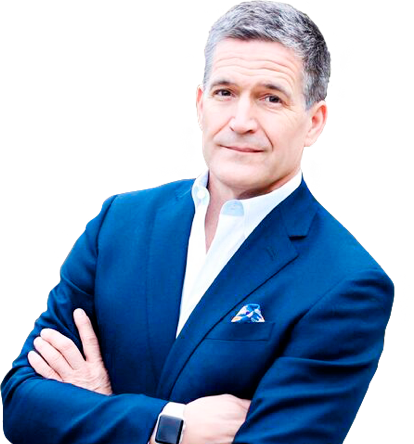
Miles Spencer is a prolific angel investor, media entrepreneur and explorer. He is best known for his role as co-host and co-creator of MoneyHunt, a reality based show where entrepreneurs pitch their ideas to a panel of experts.