
Posts Tagged ‘charity’

March 13, 2012 by miles
1 Star2 Stars3 Stars4 Stars5 Stars No Ratings Yet
Loading ... Loading ...

Largest on water cleanup- Ever.

News spread pretty quickly that the Shell Oil LNG platform destined for Long Island Sound sunk back into oblivion last week, likely for good. In its proposed form, it would have towered above all other structures on either side of that great body of water and inspired the curses of generations to follow. It should have been a procedural layup, with the interests of the Sound split between two states, both struggling with budget and resource constraints, and zero organized advocacy to oppose the revenue generating and cost saving proposal.

Now the legend of how that didn’t happen continues to grow, just as quietly as it snuck up on everybody before the battle began.

Begin with Leah Schmalz, a delightful director of legal and legislative affairs for Save the Sound, a program of Connecticut Fund for the Environment who began the opposition eight years ago with meager resources and virtually zero platform to get the word out. She picked her punches wisely.

Then, out of no where, Kayak for a Cause jumped in, ostensibly because ”Save the Sound” had the brand that most directly fit the core values of the organization. But as KFAC learned more, both organizations realized the symbiosis of their existences. What followed was a virtual marching band of support for Leah and her work at STS. When STS needed to get the word out, KFAC designed an “on the water clean up” over 14 miles of sound. When STS needed a platform to gather more supporters, KFAC was there with a stage, a microphone,and a tremendous crowd ready to listen. When STS needed promotion during a crucial state senate vote, KFAC rallied its 10,000 donors to flood the capital with expressions of concern. And when STS needed financial resources to back up Leah, KFAC was there with five figure support, year after year.

Was is most amazing, perhaps, is that all of this was started with nothing, and done for love: One simple bet, and a few guys redirecting the proceeds to charity became an annual tradition along the Sound.

It’s now hard to fathom that KFAC has always been an entirely volunteer organization which somehow fields a crew of 500 committed souls every year to manage the logistics of a modern day Normandy with a beach party at the end. The leadership and organizational talents of this group are stunning. People like Shirleen Dubuque and Steve Showalter organize provisions, supplies and people with sublime, 11th hour hijinx. Kim Beaumont at DownUnder and Dave Haddox from Purdue have likely trained hundreds of kayakers to be safe enough to make the voyage. Tad Jones worked stage miracles for years, packing thousands of people into legendary beach parties that rallies the troops around the charities. Patrick Sikes was a master magician at logistics. Amy Rule and Kathy Foreman wrangle hundreds of volunteers to do undesirable work details at unmentionable hours. And Adam Uhrynowski and Brian Russell have this magic touch capturing the whole thing on film for us to replay over and again in the long winter months of  frozen water.

All of this energy was harnessed and directed to something good, for years on end. And then last week…

“In sending a letter to the Federal Energy Regulatory Commission requesting to vacate their certificates, Broadwater has signaled that their proposed floating gas plant is finally dead,” said Leah Schmalz. “Eight years ago, the citizens of Connecticut and New York recognized that this proposed project was not good for our environment or our livelihood,” Schmalz said. “It took years of fighting, partnering with federal and state officials on both sides of Long Island Sound, but now we can say that the health and safety of our Sound will not be compromised by the proposed industrial complex.” More here

Years ago, another KFAC treasure named Morley quoted Pete Seeger  in “Where Have All the Flowers Gone” from the stage, as she had witnessed KFAC grow from dozens to hundreds and then thousands.

I’ve been surprised by some good things happening in my lifetime. Sometimes quite suddenly.

Imagine a big see-saw, with a basketful of rocks sitting on one end. That end is down on the ground. At the other end, up in the air, is a basket half full of sand. Some of us are trying to fill it, using teaspoons. Most folks laugh at us. “Don’t you know the sand is leaking out even as you put it in?”

We say, that’s true, but we’re getting more people with teaspoons all the time. One of these days that basket of sand will be full up and you’ll see this whole see-saw just tip the opposite way. People will say, “Gee, how did it happen so suddenly?”

Us, and our little teaspoons.

Leah Schmalz is now working on controlling emissions and ecoli bloom from the Bridgeport harbor. Kayak for a Cause launches for its twelfth year on July 21th. And Long Island Sound is that much nicer because they do what they do.


November 28, 2011 by miles
1 Star2 Stars3 Stars4 Stars5 Stars 1 votes
Loading ... Loading ...

"Play responsibly"

I’ve been trading everyday phone calls and emails with the developer that built our new family home. The experience hasn’t been perfect, from my perspective, but I acknowledge the guy probably has plenty other things going on besides the faulty control panel on my Kohler steambath.

Turns out, I was right.

Seems Brandon won the Connecticut Powerball lottery earlier this month, and it all came out today. For those that don’t know it, our new nhometown of Greenwich does not see a lot of suffering. In fact, if there was ever a town that did not need a lottery winner, that would be ours. If there is an Occupy Greenwich Avenue movement starting soon to decry the inequality of the 1% winning a lottery designed for the 99%, consider this: the town is full of rags to riches stories. It’s just that they usually involve numbers that come through a Bloomberg terminal, not spit out for a dollar at the local BP station. Luck is random, and this proves it, again.

But the BP station is where Brandon and his two boyhood buddies went in equal (I surmise) on a dollar bet that pulled a lump sum of $100,000,000. (Powerball markets it as $254,000,000 but that’s a 30 year payout into a black hole of tax policy no one in or out of Greenwich should take a bet on). I was recently told by an EO leadership swami that you can’t control the world, you can only control how you react to it. This is a good example of that.

He has been sitting on this news for the past three weeks. In the meantime, he has been responsive and professional about the various punchlist fixes he owes at the house. We knock something out every few days. And that says a lot about Brandon; old school, honest and possessing a genuinely good heart. I spend a lot of time thinking about Trust, and have written about the Heuristics of Trust , actually more than once. I’m not sure who bought the ticket, but the fact the three shared it also says a lot about their Huck-Finn like trust dynamic ($.66 would have bought out the others a few weeks back).

Today, they came clean and told the public. They had formed a trust, and will give a large amount to charity. They don’t strike me as the type of guys about to go on a race to the bottom and be deeply in debt 5 years after winning. It will probably not change their lives all that much, but that’s an outside view at this point. All I can say is, it has not changed my friend in the past three weeks.

That is a good story. Good on you mate.

August 01, 2011 by miles
1 Star2 Stars3 Stars4 Stars5 Stars 1 votes
Loading ... Loading ...

Medal from 10 Years of KFAC Service

Ten years, I co-founded Kayak for a Cause with Scott Carlin and we grew it to an charity organization of hundreds of participants and thousands of donors.

We did a lot of good. We had some help as well.

But the critical lesson I learned this year is knowing when and how a Founder should evolve his/her role. Even though this was a not-for-profit, the lessons apply equally for start-ups (which are often less-than-not-for-profit, anyways).

Founders roles fall generally into three buckets: starters, runners and defenders of the legacy. As I learned in KFAC and at Mojiva, starters have the hunch, put a stick in the ground and by sheer force of willpower rally others around them. It’s bold. It’s inspiring. It doesn’t last all that long.

Because as the data rolls in, a starter has to evolve into a runner and runners live on data. Market data. Customer data. Stakeholder feedback. Runners use the momentum from the starter and the data from the users to keep the party going. Hunches don’t play well. Consensus rules, or at least has a greater influence.  Interestingly, my training in YEO (an entrepreneur’s organization, now called EO) helped a lot in running a charity: here were the skills I used most often:

  • Setting roles and goals: Founder and Runners both work from a set of goals, and the successful one assign roles and responsibility toward each objective. Sharing allows the rest of the team to feel part of the mission.
  • Being open to input on making it better, but firm in direction on what that means: This was a big one for KFAC. We had a logistical challenges like a modern-day Normandy invasion with wind, weather, tide, transport, launch, provisions, safety and yes entertainment all tied into one timeline. Everyone had a better idea. Precious few could be accomplished year to year, but we made a point of giving everyone a voice in making it better. Then we decided our vital factors and were firm in focussing on those few things with major impact.
  • Giving authority and resources to accomplish goals: People love to be able to make an impact and see their results. Once vital factors are in place, the team has to have the authority and the resources to accomplish their goals. Leaders look for ways to get those to the team, and it doesn’t always mean money. Sometimes it is just shortcuts or better efficiencies.
  • Making yourself obsolete by cross training your stars: this is where we truly excelled. KFAC became bigger than any one person, and every person that made it to the Committee was told to recruit their replacement from day one and prepare to make yourself obsolete. The result was a group of leaders that could jump into multiple roles. We have had our share of people move on (it’s a charity, there are no stay-bonuses!) but we have always had a backup.

This phase is where so many Founders fall down, as the skills to be a starter are vastly different from being a runner. Very few possess both talents. Very many try to hang on too long (and as major shareholders/stakeholders are able to do so, to their own detriment).

But for those that make the jump and attract another runner to their organization, a third transition awaits: leader and defender of the legacy.

While you may still be the largest shareholder, you have empowered someone else to add value to the enterprise. While your background and knowledge can be very valuable to the new team, your meddling can be equally obstructive. Knowing when is when, and passing the torch before it’s too late is another one of those Founder hunches that Founders often don’t listen to. Here’s what I learned about that phase:

  • Provide a full transition plan: no matter what you think everyone knows, you have experienced more. Passing along facts without sharing your prejudices will allow the new team a great roadmap to consult when they need it. Do it in writing.
  • Making clear the objectives (if you remain a stakeholder/owner): just because you are passing ht e torch doesn’t mean you are selling out. Make clear your legacy and what the DNA of the business means to you. It should be respected.
  • Leaving the team to do what they do best: step away from the controls. You chose them because you trust them. Demonstrate that.
  • Supporting where you can: staying in tune and in touch will allow you to point out shortcuts, dead ends and old tricks from the master. Nothing wrong with that if done in a with respect for the new team.

I have been through this transition in both the charity and the entrepreneur world, and what surprised me most were not the differences but the similarities in leadership skills. EO taught me the things that allowed me to grow KFAC, and much of the leadership team has entrepreneurial backgrounds (surprise!) . But KFAC definitely taught me the things that have allowed me to grow start-ups.

Having a great team behind you certainly helps. BTW, you can join KFAC XII here.


February 16, 2010 by admin
1 Star2 Stars3 Stars4 Stars5 Stars No Ratings Yet
Loading ... Loading ...

KFAC X features Maori island images... sorta.

I was sitting on my porch, listening to the water gurgle peacefully in the pool as it does when I don’t change the filter right proper. I tried to figure out how a fifty dollar bet could end up, years later, launching a small armada of kayaks and a charitable phenomenon. And that’s when I put two and two together.

Kayak for a Cause, the Foundation I founded with Scott Carlin, has been pretty well documented in the press- thank you very much Greg Matusky. But one story that hasn’t been written is this: things happen when they are ready to happen. While I prefer my destiny in my hands, crossing Long Island Sound in a kayak definitely puts that destiny somewhere else. How you deal with it makes all the difference I believe.

KFAC III and KFAC IV illustrate my point.

KFAC III was a death march on water. We put 8 boats in the water. It took most of us 6+ plus hours in withering heat. Some finished in 7+. Some did not finish. Most of us needed transfusions in Long Island. My arm was mummified from the elbow to the thumb, a condition that looks as idiotic as it sounds. (I pulled too hard with the right to compensate for an uneven paddle stroke). We retuned to Connecticut, mumbled a few goodbyes, and headed for home. And half of the paddlers did not- would not- do it again.

KFAC IV was different, you might say. We put 40 kayaks in the water. I personally knocked four hours off my time, and I was basically the middle of an amazing pack that ranged from 2:00 to 3:10 total time. We stuck together, we had a nice reception in Long Island, and we posed for pictures for the media. When we got back to Norwalk, we were treated to a lobster dinner on the beach and the luscious sounds of a diva named MORLEY and her band. We raised over $70,000, about 700% over the prior year. We thought that was a lot.

Since then we have put 1,5000 butts in kayaks and lead them across Long Island Sound. We’ve raised over $1,000,000 for charities tha support our community, environment and leasdership. We have an all volunteer organization of ~50 people to produce the event. And we have a blast doing it.

So, what gives?

Truthfully, it was just the tide, doing its thing both literally and figuratively. Before we hit the water, we caught some good swells. A committed volunteer organization* rallied around us and created our look, vetted charities, recruited paddlers, sourced kayaks and chase boats, arranged land transport, found entertainment, and managed donations. We let it happen, I’m proud to say, by answering most every challenge with simply this; let it take you. We were able to deal with near disasters like being short 15 kayaks at 05:00 and logistical challenges like returning 40 kayaks by land when they had arrived by sea. To match the swell of support on land, we let the currents take us at sea: we enjoyed 3 knots tides, both out of Norwalk and into Northport, with a 5mph tail wind to boot. It was fun.

Where will the tide of KFAC take us next? One thing’s for sure, we’ll stick to the spirit and fun of that $50 bet. And we’ll let the tides take us from there.

About Miles Spencer

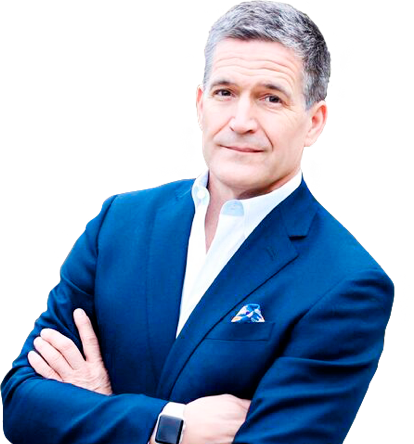
Miles Spencer is a prolific angel investor, media entrepreneur and explorer. He is best known for his role as co-host and co-creator of MoneyHunt, a reality based show where entrepreneurs pitch their ideas to a panel of experts.