
Archive for the ‘A Line In the Sand’ Category

October 21, 2011 by miles
Word

I was deep in the desert of Wadi Rum, sharing a pile of sand and a starry night while a curry dinner was cooking on the stove when our guide Saba began to talk of his family. These long treks were a good source of pay for him, but nothing could replace the feeling of wealth from  being back home, simple as it was, with his wife and three kids. He had seen more than anyone in his village (including two crazy American’s intent on trekking from Jeddah to Damascus) but nothing ever came close to the highest hierarchy of his family, his faith and his health.

We met them later in the journey, and realized just how simple this truth was. Saba waxed as poetic as a hardened deserts guide ever , in pidgin english and flowery arabi, about how important family and children were to his culture, his standing and his happiness. I was mildly embarrassed at my country and it’s focus on consumption of… everything.

Then he turned to us. And you? Do you have children?

We had been asked that question in every corner of Saudi, Jordan, and later Syria. Children: how many. Tad and I had heard it enough times to know that Tad always answered first in order to get the best reaction. I have SIX! And grandchildren as well! Hands raised in praise around the fire as everyone acknowledged the virility of my good friend. Jai’yed habibi!

And when the laughs died down and the stories were told about each of them, the eyes invariably turned to me. And what of you, Mr. Spencer. Do you have any children. I knew I would be asked, and they likely would have not much to say, perhaps some attempt at anything nice while their eyes glanced down and back into the fire. But I had been thinking a lot on the trek about just those same values, and what was important to me and my life. And I happened upon the most beautiful word, for me, for them, for the situation at hand, and for my future.

I simply said: Insha’allah.

When I said the word, and let it fall alone on the desert night it would take them a moment to realize that was my final answer. Complete. Insh’allah. They expected more (as in everyday arabic, every other word is insh’allah). It somehow still made everyone smile when they pondered further, and wish me the same good tidings as Mr Jones beside me. But for me, on that trip and ever since is was nearly a compact with myself.

It means God willing.

Grayson Max Spencer was born 12 October 2011, 5 years, 5 months, and 24 days after Saba lit that fire. Amazing what you can learn in the desert.

Another amazing adventure.

September 23, 2011 by admin

From my UN field trip...

The streets of new York City are clogged with tyrants, powerbrokers, divas and muses these days… and I don’t just mean Fashion Week! The Isle of Manhattan yields to the UN General Assembly’s Fall Gathering, and while I passively observe both, Melissa reminds me I am more useful commenting on the latter.

I spend a fair amount of time and capital in my own quest to understand the Middle East, but it doesn’t take all that to know this week brings a seminal moment in our influence there… it’s a whole new ball game if you haven’t noticed.

Wednesday’s Sarkozy rebuke of Obama was legendary, but Friday brings us the big squirm: the Palestinian quest for membership at the U.N is driving the US to the brink of sanity as throwing a veto on behalf of Israeli interests will surely off the rest of the Arab States. In the morning, Palestinian President Mahmoud Abbas is scheduled to speak. He has said that after he gives that speech, he will deliver a letter for application to the U.N. secretary-general. Israeli Prime Minister Benjamin Netanyahu is scheduled to speak a little later in the day.

What makes me interested in this business is that the Arab Spring has set in motion a Rube Goldberg progression with no known end result. What Cairo unleashed was the power of  mobile social media among restless people, aided by the most unlikely of news sources al-Jazaeera. Long running dynasties in are running scared. And the West and the US in particular has at least one eye on the oil spigot, at least one toe in the Israel camp, and one hand in their pocket looking for the any loose change to help their ailing economy. Meanwhile, with this “people’s democracy” thing being bandied about as the likely solution to the vacuum left by the tyrants I have to believe everyone at the UN Cafe is wondering where it all leads and who leads after all.

Many of us Americans were only recently introduced to Islam in a most unfortunate way 10 years ago, as Irshad Manji points out in her blog . The Middle East is beginning to get its footing in modernity after a long and deep slumber with a rich cultural and religious legacy. That footing will displace our world order. As Robert Fisk opines in the Independent  this vote at the UN – General Assembly or Security Council is going to divide the West – Americans from Europeans and scores of other nations – and it is going to divide the Arabs from the Americans. It is going to crack open the divisions in the European Union; between eastern and western Europeans, between Germany and France (the former supporting Israel for historical reasons, the latter sickened by the suffering of the Palestinians) and, of course, between Israel and the EU.  Ten years ago on 9/11 OBL succeeded in polarizing the West and the Muslim world  Zach Karabell, from Daily Beast reminds us, but a decade later, in the wake of the Arab Spring, that seems more transitory than permanent. We are living one of Thomas Friedman’s four ruling bargains, and it is going to probably hurt.

I was fortunate enough to join US Ambassador Frank Wisner for breakfast this week at the Next American Economy gathering put on by Bo Cutter. Reflecting on his overview, and I paraphrase here and am not quoting or mis-quoting,…the glide path from hegemony to responsible power is an important one for the US to manage. Letting domestic politics trump global influence will make the landing a hot mess. We must remember the importance of events, stay engaged, and remain cautious.

So while the Middle East and  the Arab spring may seem far away to us most of the time, this week the whole show is right here in Manhattan and the effects of how it all plays out will have profound influence on how we are viewed in the world. It will be a painful reminder of just how vulnerable we Americans really are.

No fashion runway ever had so much riding one show!

05 September

Seriously, Syria?

September 05, 2011 by miles

Errmm, all's well here...

The beatings will continue until morale improves…

That about sums up the Assad’s family strategy for dealing the outbreak of “Arab Spring” in Syrian towns as it continues into “who’s next to Fall, this Fall”.  I think it is a country worth keeping an eye on, though it is very difficult with limited social media permitted.

Fellow Americans know so very little about the little country wedged between Lebanon and Iraq. I know just enough to be dangerous: my trek through the country with Tad Jones gave us a very unique perspective and continues to be the influence for our singular effort to inform our kin with our in-development play, A Line in the Sand. As we’ve said before, the region may look differently if TE Lawrence used twitter. We have tried piecing together Syria’s history enough to understand its future. But we’ve only been noodling it for five years, while they’ve had centuries to create the puzzle. Here’s a few pieces:

First: Syria is a key domino in one of the four big tectonic changes that will define the next generation: access to oil. While they have little oil themselves, they have long been a keystone in the strategic interests of the region, crossing both ethnic and geographic ties. Many of the current conflicts in the region lead back to Damascus, one way or another: Baghdad, Tehran, West Bank, Golan, Beirut, Israel proper, the Palestinian question, etc. etc. The entire region has a long history of being tribal, and Syria has exploited those gaps for centuries.

(for the other three, and a lot more eloquent grasp of geo-politics, see Thomas Friedman and the world’s four ruling bargains): 1) The world’s oil tap is deposing its old regimes, 2) Europe is unravelling as PIIGS spend and Germans save, 3) China’s deliberately undervalued currency and export-led growth keeping the Communist Party’s in power by providing rising living standards, and 4) In America, a credit-consumption-led economy, whereby we maintained a middle class by using steroids (easy credit, subprime mortgages and construction work) and less muscle-building (education, skill-building and innovation).

Second: It’s strategic. because of this  position, the region has been fought over for centuries. Long before there was oil, there were the Crusades whereby the Catholic church essentially invented the jihad, IMHO. Teutonic Knights were promised eternal gratitude and absolution in advance for re-taking Jerusalem and slaughtering anyone that stood in the way. This generally meant Muslims. In support of the thousands that made their way to the Holy Land, huge logistical challenges were met as Hospitallers literally paved the path from France to Palestine with roads, castles, and supporting infrastructure provisions (and became rich in the meantime).  I have personally visited Krak de Chevaliers in Homs and I can attest to the awesomeness of the work as well as the brilliance of the positioning. It was clear the spot was very important and was not going to be given up easily.

Third: Syria is the ultimate state controlled, exterior influenced, family business. Bashar al-Assad is the current president, and was preceded by his father Hafez al-Assad. Bashar’s prior occupation was ophthalmologist, so it was likely his family connections that got him the job. With very few natural resources and de-minimus GDP (#67 thank you, just beating Oman) sometimes it seems like the whole country gets by playing two rivals against another, or one against the middle. Iran and Russia have deep ties, obviously. The former a result of Cold War support, the latter more like neighborly politics. Syria has been under Emergency Law from 1962, effectively suspending most constitutional protections for citizens, and its system of government is considered non-democratic. Many citizens I know live between terror and resignation. If the Arab revolt continues, hope will replace resignation, but terror will continue.

Fourth: Syria has stunningly rich history. The near future is likely to take inspiration from its past. I had the good fortune to tour just a bit of it, including Jerash which was one of the great Roman outposts and remains today one of the finest of Syria’s 50,000 archeological sites. The Crusaders rolled through a thousand years later and left an amazing collage of castles and fortifications. The French have stuck around for the past millennium in the Levant, and it shows. In this century, Lawrence of Arabia organized the tribes of the dessert into revolt against the Turks by promising Damascus as the prize upon victory. For a people raised in the sands of the deserts, there was no more fertile green imaginable. The bait worked, for at least as long as Lawrence’s promises weren’t already undercut by French-English back-handedness. The West is still reaping what was sown in post WW I Syria it’s no wonder Lawrence is called by one biographer ”A Prince of Our Disorder”.  

So, far as I can see, the beatings in Syria will likely continue. It will not fall easily because we have little leverage, outsiders are too interested in the status quo, and the insiders are not interested in anything short of carrying on. Change will depend on those who see the benefits and are willing to risk to consequences of the process. In the meantime, I wish my Syrian friends their safety, peace and a better place than yesterday.

PS: the best damn rose petal jam in the world is served with the french croissants at the Biet al mamlukkka hotel.


February 23, 2011 by admin

Tad and Alleyanne. Wadi Rumm.

I once rode a camel across the desert, with a local named Saba and a TE Lawrence look-alike, Tad Jones. We concluded that the Middle East would be more fun if Lawrence had had access to Facebook and Twitter. If he had, some of his posts might have looked like this:

  1. WTH #Versailles we can’t mix #Sunni rulers with #Shiite peeps. They don’t abide!
  2. Not a drop of water in this damn desert! Black goopy stuff all over. Burns good though… other uses???
  3. #Libya, using bombers on (your) people in the streets? see #Baghdad. Eventually, they do start to hate.
  4. How is everyone spelling #Khadaffi?# Gadaffi? #Quadaffi? In the name of the holy one, please choose!

Lawrence wrote the seminal work on the Middle East in a notebook . Since then, Seven Pillars of Wisdom has never been out of print, and never far from the bedstands of every despot, marine and guerilla with even a passing interest in the region. Here’s the Cliff Notes for the rest of us:

  1. It’s tribal. From Baghdad to Riyadh, there are hundreds of unique tribes and dozens of sects.  Sunnis and Shia are just two. The locals have been wandering, sniping and looting each other for a thousand years. Recent behavior has improved, but they don’t trust outsiders quickly.  Or much, for that matter.
  2. It’s slightly blessed with a black gooey natural resource, which has fallen into the control of a small elite class. The Western world (France, England and the US, for this discussion) has quite an appetite for said Black Stuff- so we’re willing to tolerate the stench of  the despots who control it. China is immune to this moral argument, (see prior post on China: How we roll).  In any event, we set up most of them in their cushy situations, but this “buddy deal” tends to upset the masses.  And then the leaders have to choose, because…
  3. The borders of these kingdoms are completely made up. It happened one afternoon in 1921 over tea at the Cairo Country Club when Winston Churchill, T.E. Lawrence, Gertrude Bell et al literally drew Lines in the Sand (check out the play by the same name in development by writer A.C. Grayling).

Cairo in 2011 has shown what can be accomplished by the people, when the people are informed.  What would the rest of the Middle East be like if TEL had been tweeting back then?  Here’s my take:

  1. Oil might have been priced higher if the locals knew how badly we wanted it in the 1920′s (by reading Facebook Updates instead of outdated, state controlled papers).
  2. The West may not have gotten away with simultaneous promises to a) give Syria to the French, b) give Palestine to the Jews, and c) arrange a pan-Arabian nation for the tribes. But we did, until the beans were spilt and all hell broke loose. Sorry!
  3. And the leaders of these countries might have been elected by the people instead of chosen by France and England, and consequently overthrown by despots who are quite good at exploiting the resources.

But, the way things are going, Facebook and Twitter are keeping things honest over there now. And we might be getting higher oil prices and elected officials soon enough!

Author note: I have friends in every one of these countries, and have visited most of them. I do not belittle the violence against them.

February 04, 2011 by admin

Keops, in quieter times...

Keops (aka Khufu) was built in the 4th Dynasty for the Pharaoh du jour. Messages carved in stone unanimously glorified the ruler and were hard to read.

Oh what a difference 4,500 years can make.

Tomorrow’s Egypt  is emerging 140 characters at a time, as cartouches have been traded for mobile phones and information is no longer the sole ward of the state. On my trip down the Nile awhile back, I was amazed to learn that controlled messaging dates back to Ramses III. They literally chiselled off hieroglyphs when power changed… and the new ruler appropriated the legends of his predecessors. No one dared challenge what was written in stone, as long as the Big Man had the muscle to enforce the message —  and the masons who chiseled them. Whispers of discontent certainly existed, but never reached very far beyond those stones.

Today the whispers travel in a different way: posted in Facebook and Twitter, they come with damning video.  They ricochet across oceans in milliseconds. And they gain momentum, swaying the mob, quickly. Raw and short, they gain credibility if accurate, and if not, are quickly debunked. The crowd usually polices itself and it’s messages. And those crowds form and disperse, online and in the real world, through the networks they have built. (Moment of  irony to prove the point: Cellufun’s Call of the Pharoah has 250,000 uniques per month, and it’s only a mobile game with virtual coins at stake.) Take those networks away, as Mubarak did in his version of “The Night the Lights went out in Georgia”, and the locals only get more upset, while abroad, the human rights activists rally.

And while it may all seem a fickle virtual world, I think it’s just the speed of information that is making things look volatile.  Nothing happened fast when reported by chisel, but things DID evolve once the word got around. So the world grinds on, but the pace keeps quickening. And while these numbers sound awesome, fast and large, I think the ways that we use mobile is still in its infancy. Cisco seems to agree in this week’s white paper, expecting 25x growth for mobile data over the next 5 years. The graph simply goes up and to the right, like the pyramids. (More on who pays for all this, in another post).

And so, whoever leads Egypt, will have to drop the chisel and respect the smartphone. Word gets around, the pace only gets faster from here and dark shadows are getting harder to find.

About Miles Spencer

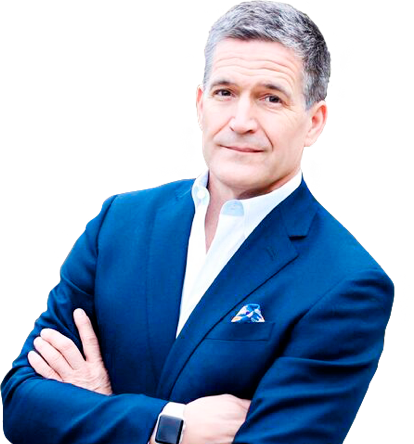
Miles Spencer is a prolific angel investor, media entrepreneur and explorer. He is best known for his role as co-host and co-creator of MoneyHunt, a reality based show where entrepreneurs pitch their ideas to a panel of experts.