
Archive for the ‘Geopolitical’ Category

March 09, 2012 by miles

I just flew over America again.

I went to LA and was pitched in the Palisades Room at the Santa Monica Fairmont for two straight days and all I ever saw were VC’s, bankers and their cars rolling up to the front entryway. We didn’t see any Occupy groups, but they would have had a blast I’m sure. I took a break and saw my Choate roommate Michael Scott for dinner in West Hollywood and it was plenty more of the same with a few stars and starlets thrown in (not typical VC fare, that).

All good and all nice people. But I have this palpable sense that, slightly below the surface of the Brave Face of America (any in many towns between LAX and JFK), there is a shitstorm brewing among people who are tired and distraught. It’s probably about jobs, and the fact that we really don’t have enough of them to go around. That and the facts that, despite the 1,000 attendees at the Monty Conference, we are throttling the engine to create them. The coming world war will be an all-out global war for good jobs, says Gallup’s chairman Jim Clifton. I couldn’t agree more, and they won’t come from shovel ready Government civil works, nor from meaningless tax credits and incentives.

More proof of the disconnect irony comes from the Daily Beast’s Zach Karabel: The last time the markets were at their current levels—the tech-heavy NASDAQ index is also at its highest since the Internet bubble burst in 2001—sentiment was radically different. In May of 2008, Bear Stearns had nearly collapsed, only to be bought on the cheap by J.P. Morgan, and the bankruptcy of Lehman Brothers was a nightmare scenario that had barely been contemplated. The housing bubble in the U.S. was clearly deflating, but unemployment had not yet spiked. And while many believed a recession was looming, few forecast a financial crisis. Still, the outlook was cloudy at best, and a descent from 13,000 seemed likely. The strength in financial markets, and stocks especially, is not a proxy for real-world economies.

It’s been said before and needs to be said again: Wall Street isn’t Main Street. The Dow can be 13,000 or 14,000 and it won’t matter a whit to the millions of unemployed and underemployed. Few jobs are created by rising equity prices, and companies will not hire unless there is stronger demand, no matter how high their shares climb. They will sooner pay a dividend to shareholders, buy back stock, or acquire competitors than hire extra bodies that are not necessary for managing current business or creating new ventures.

And that’s the root issue: though America has a GDP of about 3x the nearest competitors (being japan, UK, France, Germany, Italy) its growth has been anemic compared to China, who still lags the top five. We spend too much, we don’t take in enough, and it’s becoming a bad running joke in world lending corridors (where are those)? As any creditcard will remind you, in 20-30 years, 10% growth compounded beats just about anything. But last time we heard footsteps, we hit the dot.com boom and pulled away with innovation and productivity gains never seen before.

That’s what is needed now. And I think Mobile, social and sharing will be three places where innovation will lead.


27 December

2011 in a tweet

December 27, 2011 by miles

Life in 140 character bursts

Here’s one way to wrap up 2011:

World 2011in<140: ArabSpring Tsunami Wedding(Royal,Kim) Osama DSK Jobs(Steve,austerity) Riots Floods OWS PepperSpray Mobile!

Me 2011in<140: Wedding (mine) New Jobs (Mojiva-106) Angel ($500k) Venture ($25M) Contractions (hers) Startup (WellAware) Move (Greenwich) Baby (First) Sleep (Last)

Twitter was one thing I learned in 2011. Like most things in my life, I had never done it before. I just observed for a bit and waded right in. I ended up tweeting or retweeting 1,300 times or 100+ a month which turned out to be not at all a waste of time. Looking back at my tweets over time I recognize some basic trends that may help others considering jumping on Twitter on 2012. A few rules I learned:

  • Add something to the conversation: This was #1 for me. I always try for, and sometimes fail at, a witty or creative thought, a piece of news before it’s over-reported, or a new point of view. I never tweeted “wonder if that cloud will pass behind that building”, or “bacon egg and cheese sandwiches umm”. As in life, the less you say, the more likely people will think you have something interesting when you finally speak. At least that worked for me, so far.
  •  Follow a few people you respect: Fellow EO member David Kerpen  does an excellent job of outlining social media and has been a good one to follow. Henry Blodget has it covered in digital media. Irshad Manji is great on Middle East issues, Nick Kristoff on global. Dave McClure is hilarious on angel investing. Bill Gross is great on start ups. Joe Navarro is great at just reading people. April Rudin is awesome on the HNW community.
  • Follow a few topics of interest: The topics I followed were angel investing, venture capital (though they play it pretty close to the vest), Middle East conflict, cooking, a few football players, local news, and disaster recovery (twitter is a great way to track fast breaking news).
  •  Keep it light, and consider the consequences: I also follow some hilarious parodies and humor, not all of which I have the guts to retweet. Miguel Bloombito  is a farcical twitter account of NYC’s Mayor trying to get by in Spanish. Ricky Gervais is just raw sewer level humor that keeps coming non-stop. FAKEGRIMLOCK is supposed to be a software coder on a mission, but it’s likely just Brad Feld’s alter ego. AdamU has perfected the 140 character definition of snark. I love Henry_Kissinger (paraody)

I should also add it is a good way to make notes to yourself, make a legit complaint to an airline (they monitor those things), keep track of people in a disaster, and wedge your way into an important discussion. I did all these things in 2011. So I’m glad I jumped on Twitter, finally. It hasn’t changed me much, just made me more of who I already am. Remains to be seen if that’s a good thing.


November 21, 2011 by miles

How long can Ben float?

Years ago I got my start on Wall Street and was assigned to read business plans for a tiny investment banking boutique named Beuret & Co. I saw a lot of crap, but nothing near what the deficit “super committee,” must be analysing this week.

I didn’t have any financial background aside from a knack for knowing what added up and what didn’t, in a spooky kind of way. By my own count, people had wheeled in something like 10,000 plans, which I digested and, in many cases called the hapless entrepreneur and told them why it wouldn’t work, IMHO of course. One habit that I had been to take a little 3×5 piece of scrap paper and staple it to the cover of the plan with some basic facts, just to rememebr what plan I was talking about. What industry. Problem and solution. Stage of development. Unique properties. Raise and use of capital. And profit and loss basics. When I was asked about this deal or that, I had a handy reference, but later in life I realized that, once you get it you rarely needed more than those basics. (See my many references to investing like a child). When asked later in life how I came to read plans so quickly and asses a companies prospects in a flash, my only explanation was that when you see 10,000 of anything wrong by process of elimination you begin to know what is right.

Which is why, when I read this balance sheet and income statement on USA Inc. from Mary Meeker at the end of her Mobile Update, I nearly cried.

It came at the end of her regular update on digital media, now done under the auspices of Kleiner Perkins. She has routinely walked through the basics of income, expense, assets ans liabilities much the way I would have done it sitting in my little cubicle on Wall Street. As an American citizen, listening to this deadpan presentation is a must-do.

“By the standards of any public corporation, USA Inc.’s financials are discouraging,” she writes in an introduction to the report. “True, USA Inc. has many fundamental strengths. On an operating basis (excluding Medicare and Medicaid spending and one-time charges, the federal government’s profit and loss statement is solid, with a 4% median net margin over the last 15 years. But cash flow is deep in the red (by almost $1.3 trillion last year, or ~$11,000 per household) and USA Inc.’s net worth is negative and deteriorating. That net
worth figure includes the present value of unfunded entitlement liabilities but  not hard-to-value assets such as natural resources, the power to tax or mint  currency, or what Treasury calls ‘heritage’ or ‘stewardship assets’ like National Parks. Nevertheless, the trends are clear, and critical warning signs are evident in nearly every data point we examine.”

If the United States of America was a start-up, no one would give it any more money. More likely we would just take it out back and shoot it.  Luckily, USA is not a start-up, but unfortunately it still takes a boatload of faith and capital to run the thing. While unlikely to actually go out of business, the cost of keeping the lights on gets higher and higher as the faith goes lower.

This does not bode well for us. But we can do something about it. If we really try.

More likely, it will get kicked to 2012 instead.


September 23, 2011 by admin

From my UN field trip...

The streets of new York City are clogged with tyrants, powerbrokers, divas and muses these days… and I don’t just mean Fashion Week! The Isle of Manhattan yields to the UN General Assembly’s Fall Gathering, and while I passively observe both, Melissa reminds me I am more useful commenting on the latter.

I spend a fair amount of time and capital in my own quest to understand the Middle East, but it doesn’t take all that to know this week brings a seminal moment in our influence there… it’s a whole new ball game if you haven’t noticed.

Wednesday’s Sarkozy rebuke of Obama was legendary, but Friday brings us the big squirm: the Palestinian quest for membership at the U.N is driving the US to the brink of sanity as throwing a veto on behalf of Israeli interests will surely off the rest of the Arab States. In the morning, Palestinian President Mahmoud Abbas is scheduled to speak. He has said that after he gives that speech, he will deliver a letter for application to the U.N. secretary-general. Israeli Prime Minister Benjamin Netanyahu is scheduled to speak a little later in the day.

What makes me interested in this business is that the Arab Spring has set in motion a Rube Goldberg progression with no known end result. What Cairo unleashed was the power of  mobile social media among restless people, aided by the most unlikely of news sources al-Jazaeera. Long running dynasties in are running scared. And the West and the US in particular has at least one eye on the oil spigot, at least one toe in the Israel camp, and one hand in their pocket looking for the any loose change to help their ailing economy. Meanwhile, with this “people’s democracy” thing being bandied about as the likely solution to the vacuum left by the tyrants I have to believe everyone at the UN Cafe is wondering where it all leads and who leads after all.

Many of us Americans were only recently introduced to Islam in a most unfortunate way 10 years ago, as Irshad Manji points out in her blog . The Middle East is beginning to get its footing in modernity after a long and deep slumber with a rich cultural and religious legacy. That footing will displace our world order. As Robert Fisk opines in the Independent  this vote at the UN – General Assembly or Security Council is going to divide the West – Americans from Europeans and scores of other nations – and it is going to divide the Arabs from the Americans. It is going to crack open the divisions in the European Union; between eastern and western Europeans, between Germany and France (the former supporting Israel for historical reasons, the latter sickened by the suffering of the Palestinians) and, of course, between Israel and the EU.  Ten years ago on 9/11 OBL succeeded in polarizing the West and the Muslim world  Zach Karabell, from Daily Beast reminds us, but a decade later, in the wake of the Arab Spring, that seems more transitory than permanent. We are living one of Thomas Friedman’s four ruling bargains, and it is going to probably hurt.

I was fortunate enough to join US Ambassador Frank Wisner for breakfast this week at the Next American Economy gathering put on by Bo Cutter. Reflecting on his overview, and I paraphrase here and am not quoting or mis-quoting,…the glide path from hegemony to responsible power is an important one for the US to manage. Letting domestic politics trump global influence will make the landing a hot mess. We must remember the importance of events, stay engaged, and remain cautious.

So while the Middle East and  the Arab spring may seem far away to us most of the time, this week the whole show is right here in Manhattan and the effects of how it all plays out will have profound influence on how we are viewed in the world. It will be a painful reminder of just how vulnerable we Americans really are.

No fashion runway ever had so much riding one show!

05 September

Seriously, Syria?

September 05, 2011 by miles

Errmm, all's well here...

The beatings will continue until morale improves…

That about sums up the Assad’s family strategy for dealing the outbreak of “Arab Spring” in Syrian towns as it continues into “who’s next to Fall, this Fall”.  I think it is a country worth keeping an eye on, though it is very difficult with limited social media permitted.

Fellow Americans know so very little about the little country wedged between Lebanon and Iraq. I know just enough to be dangerous: my trek through the country with Tad Jones gave us a very unique perspective and continues to be the influence for our singular effort to inform our kin with our in-development play, A Line in the Sand. As we’ve said before, the region may look differently if TE Lawrence used twitter. We have tried piecing together Syria’s history enough to understand its future. But we’ve only been noodling it for five years, while they’ve had centuries to create the puzzle. Here’s a few pieces:

First: Syria is a key domino in one of the four big tectonic changes that will define the next generation: access to oil. While they have little oil themselves, they have long been a keystone in the strategic interests of the region, crossing both ethnic and geographic ties. Many of the current conflicts in the region lead back to Damascus, one way or another: Baghdad, Tehran, West Bank, Golan, Beirut, Israel proper, the Palestinian question, etc. etc. The entire region has a long history of being tribal, and Syria has exploited those gaps for centuries.

(for the other three, and a lot more eloquent grasp of geo-politics, see Thomas Friedman and the world’s four ruling bargains): 1) The world’s oil tap is deposing its old regimes, 2) Europe is unravelling as PIIGS spend and Germans save, 3) China’s deliberately undervalued currency and export-led growth keeping the Communist Party’s in power by providing rising living standards, and 4) In America, a credit-consumption-led economy, whereby we maintained a middle class by using steroids (easy credit, subprime mortgages and construction work) and less muscle-building (education, skill-building and innovation).

Second: It’s strategic. because of this  position, the region has been fought over for centuries. Long before there was oil, there were the Crusades whereby the Catholic church essentially invented the jihad, IMHO. Teutonic Knights were promised eternal gratitude and absolution in advance for re-taking Jerusalem and slaughtering anyone that stood in the way. This generally meant Muslims. In support of the thousands that made their way to the Holy Land, huge logistical challenges were met as Hospitallers literally paved the path from France to Palestine with roads, castles, and supporting infrastructure provisions (and became rich in the meantime).  I have personally visited Krak de Chevaliers in Homs and I can attest to the awesomeness of the work as well as the brilliance of the positioning. It was clear the spot was very important and was not going to be given up easily.

Third: Syria is the ultimate state controlled, exterior influenced, family business. Bashar al-Assad is the current president, and was preceded by his father Hafez al-Assad. Bashar’s prior occupation was ophthalmologist, so it was likely his family connections that got him the job. With very few natural resources and de-minimus GDP (#67 thank you, just beating Oman) sometimes it seems like the whole country gets by playing two rivals against another, or one against the middle. Iran and Russia have deep ties, obviously. The former a result of Cold War support, the latter more like neighborly politics. Syria has been under Emergency Law from 1962, effectively suspending most constitutional protections for citizens, and its system of government is considered non-democratic. Many citizens I know live between terror and resignation. If the Arab revolt continues, hope will replace resignation, but terror will continue.

Fourth: Syria has stunningly rich history. The near future is likely to take inspiration from its past. I had the good fortune to tour just a bit of it, including Jerash which was one of the great Roman outposts and remains today one of the finest of Syria’s 50,000 archeological sites. The Crusaders rolled through a thousand years later and left an amazing collage of castles and fortifications. The French have stuck around for the past millennium in the Levant, and it shows. In this century, Lawrence of Arabia organized the tribes of the dessert into revolt against the Turks by promising Damascus as the prize upon victory. For a people raised in the sands of the deserts, there was no more fertile green imaginable. The bait worked, for at least as long as Lawrence’s promises weren’t already undercut by French-English back-handedness. The West is still reaping what was sown in post WW I Syria it’s no wonder Lawrence is called by one biographer ”A Prince of Our Disorder”.  

So, far as I can see, the beatings in Syria will likely continue. It will not fall easily because we have little leverage, outsiders are too interested in the status quo, and the insiders are not interested in anything short of carrying on. Change will depend on those who see the benefits and are willing to risk to consequences of the process. In the meantime, I wish my Syrian friends their safety, peace and a better place than yesterday.

PS: the best damn rose petal jam in the world is served with the french croissants at the Biet al mamlukkka hotel.


July 27, 2011 by miles

Gimme your keys, I'm a good guy... online.

I recently let a home in France from no-one I had ever met, except online.

When I returned, I realized it’s been awhile since I have wailed away on Trust and the dangers of a Trust gap between online behavior and offline repercussions. My thesis is that, if the Trust gap could be bridged, the Sharing Economy (aka collaborative Consumption) would take off.

Since my first post, Sharing Darling airBnB topped off a $112M raise at $1B valuation, which is a good start!  Full disclosure: I have an investment in, and a deep belief for, the benefits of  TrustCloud, mentioned  frequently in my posts but not here.

When you hand the housekeys  to a couch surfer, leave the kids with the new sitter, or hitch a ride with three total unknowns, it’s not a natural feeling. I’ve written about it in my MadMen post, as well as the downside in my Catfish story.

The antidote?  Trust. After my first post of five mistakes, here are five more  common Trust mistakes we are hardwired to commit in real life, and more evidence we should consider asking for a Hall Pass before exposing ourselves in real life to peeps we met online:

 6. Contamination effects, whereby we allow irrelevant but proximate information to influence a decision;

7. The effect heuristic, whereby preconceived value-judgements interfere with our assessment of costs and benefits;

8. Scope neglect, which prevents us from proportionately adjusting what we should be willing to sacrifice to avoid harms of different orders of magnitude;

9. Overconfidence in calibration, which leads us to underestimate the confidence intervals within which our estimates will be robust (e.g. to conflate the ‘best case’ scenario with the ‘most probable’); and

10. Bystander apathy, which inclines us to abdicate individual responsibility when in a crowd.

How many of these dumb trust mistakes do you recognize? When you layer online activity on top of your offline judgements, does it begin to get scary? It has me thinking there has to be an improvement if Sharing is to get super-scale.

July 26, 2011 by miles

Video Squid-eo

People that witnessed my hoarse performance at this week’s Young Start Up Panel learned I had spent the previous night at U2 show.  And believe it or not,  U2 can teach entrepreneurs an awful lot about success, because they live a few of its basic principles:

  • They have meaning and relevance
  • They understand timeliness
  • They have local impact with a global reach
  • They live with respect, gratitude and humility

Five years ago, a lifelong friend Mark (MvK) and I caught U2 at Croke Park in Dublin. We were so impressed, we spent the rest of the night in Temple Bar debating their ranking in “The Most Influential Bands of All Time,” along with perhaps the Stones and The Beatles. I cover that and more in this blog from way back when.

This week, Bono, Edge, Mark and I all reunited in the Meadowlands with a few others (!) and we conceded the Most Influential Band of our Lifetime to U2. The group’s tours ranked them second in total concert grosses for the decade after The Rolling Stones, although U2 had a significantly higher attendance figure than the Stones. They were the only band in the top 25 touring acts of the 2000s to sell out every show they played. In April 2011, the U2 360° Tour became the highest-grossing tour in history, surpassing earnings of $558 million and breaking The Stones’ previous record.

Any entrepreneur with this level of success does not need my advice. But numbers alone are not the reason for our award to U2. In order to transcend a niche, sustain your existence, leave a legacy, and essentially change the world for the better, a band –or even an entrepreneur  – needs to consider these big four points:

Point #1) Meaning and relevance

How well are you listening and knowing your audience? Of all the millions of fans that U2 has performed in front of, they have always forfeited 20% of their audience to “backstage blindness.” Though their audience grew up on video mashups (MTV), it now also digests facts in tweet size doses.

Enter the Vid-Squid: a Willie Williams-designed four-legged contraption—which cost around $25 million, weighs 400 tons and is responsible for a harrowing carbon footprint—while offering a 360-degree vantage of U2 with its cylinder-shaped expandable screen and circular catwalk.  It was a technical workhorse that solved the 360 problem and served the digital and audio needs of everyone in the house.

Here’s a video with more of what I mean: U2 on YouTube

How willing are you to Pivot and Reinvent? U2′s most beloved line in my book is “we are reapplying for the job of best rock band of all time.” In three decades, the band has continually morphed, synthesizing punk, glam rock, stadium anthem and mashups, without betraying their core audience. They’ve taken huge chances (Zoo Tour being a big one) that failed, and as I pointed out in a previous post, had the courage to keep reinventing.

A great example of this balls-out kind of courage came when MvK and I were discussing whether Bono indeed had a great voice or just a “people’s voice,” best-suited for sing-alongs or gospel choirs. Moments later, the band began a superb mashing up of an operatic aria into the greatly-meaningful  song, “Miss Sarajevo.” With Luciano Pavarotti long since departed, we both wondered who would sing his part. No need; Bono literally channeled Pavarotti and hit every note with chilling brilliance – and in Italian.  Not your average rockstar trick there. And extremely courageous.

Burma's msg, via Vid Squid

Point #2) Timeliness

How well do you use your leverage, when you have it? This means not wasting your moment in the spotlight, but using it to extend the franchise and transcend what just good product alone can’t deliver.

Arguably, U2’s moment has lasted quite longer than their two and a half hour concert mastery. For thirty years, the members of U2—as a band and individually—have collaborated with other musicians, artists, celebrities, and politicians to address issues concerning poverty, disease, and social injustice. (This list from Wiki)

U2 and Bono’s social activism have not been without its critics. Several authors and activists who publish in politically-left journals such as CounterPunch have decried Bono’s support of political figures as well as his “essential paternalism.” I think recipients of their largesse would say “paternal me all you want.” Other news sources have generally questioned the efficacy of Bono’s campaign to relieve debt and provide assistance to Africa. Tax and development campaigners have also criticized the band’s move from Ireland to the Netherlands to reduce its tax bill.  To which I — and they — say, ‘Yeah, and?”

Point #3) Local impact/ Global reach

KNOW your audience

It has to work first at home. Ask Starbucks. They spent YEARS in Seattle before taking their perfection on the road. So ask yourself… How well is your product received, adored, and used by the locals?

Bono started the evening by saying “We just want to thank Mr. Springsteen for letting us the hall tonight.” It was witty, humble, and got a roar from the crowd because it proved he was totally in tune with a bit of the locals. He thanked people from Conn-ect-i-cut, Penn-syl-vania, Jersey and New York for coming out on such a hot night, by Irish standards. And when he spied a sign in the crowd that said “For Clarence,” he stopped the show to let it be passed up onstage. He owned the locals.

And then he took it global like only U2 can.

Beautiful Day

He conjured up Commander Mark Kelly on the big screen via space satellite (OK, pre-recorded I later learned) to flip through poster boards of “Beautiful Day’s” lyrics.

His presence gave new meaning to the “Space Oddity” lyric, “Tell my wife, I love her very much, she knows,” which he quoted at the end of the song.

“Walk On” closed out the set with an emotional presentation by Amnesty International, as U2 fans piled onto the catwalk carrying large candles to remember the conflict taking place in Burma and the plight of the recently freed Burmese politician Aung San Suu Kyi, who also addressed the crowd from the expandable screen (above).

It’s a hard act for any little entrepreneur to follow, but this breadth and depth of action can certainly inspire some good work. U2’s efforts have effected change in Famine, Aids, War, National Debt, Political imprisonment, Pro Democracy, and preservation of music around the world. In my own samall way, I try to do what I love, and believe I have a better chance to make an impact as well.

Point #4) Respect, gratitude and humility

Thank others.

If it all works, don’t think it’s just because you’re good. I’ve had the honor to work with and hang around an awful lot of entrepreneurs that have met with some spectacular success.

The best of them recognize that, while they were good (like many others), they were also not strangers to luck and timing. Too many react by saying “that was fun, I want to do it again and again” … and then meet a hard fail. “Once in a lifetime” often means just that.

But U2 was none of that. I was struck by these sincere comments throughout the night:

  • “Thank you for giving us this wonderful life.” (For an entrepreneur that would be: thanks for letting me be an entrepreneur: it’s is hard, but great)
  • “Thank you for paying for this monstrosity.” (Entrepreneurs might thank investors for funding their new product launch)
  • “Thank you to our warm up band.” (Thanks to those that came before us in the innovation chain)
  • “Thank you Mr. Springsteen for letting us this hall.” (Thanks to the local expert  that let us dabble in his warehouse)

So for everyone who thought I was just hanging out with MvK at a concert, taking pictures of mobs of people watching four men and a crazy stage production I say this: I was thinking!

For an entrepreneur, attempting to separate Work from the Rest is not only impossible, it’s a waste of kinetics and karma. As U2 have proven, we are One, with every ounce of our experience contributing to our creative output, bad or good.

Miles to go. Walk on.

~

PS: How to translate U2 in Entrepreneur

Meaning/Relevance: LISTEN to your damn market. Solve problems that really cause pain. Provide solutions that really are game changers.

Timeliness: Too late or too early is a loser. Being in the trend as it comes ashore is the only thing that works.

Local impact/ Global reach: Make it perfect for a small core group (or locals), but have the scalability to roll it out global.

Respect, gratitude and humility:  When it works, it doesn’t just mean you’re hot sh*t and could repeat it. Act accordingly.

May 27, 2011 by miles

Now everyone knows...

It’s been a busy few weeks for Trust.

When Fast Company covered the concept recently, they called it “The Sharing Economy”. Now more light and more capital has begun to flow toward companies that are enabling the peer to peer trading that the web promised long ago. (Isn’t it funny how the web delivers, if you can afford to wait long enough)!

Rachel Botsman coined the term  Collaborative Consumption ( or “CollCons”) and has  written about it in “What’s Mine is Yours” . She’s become a bit of an evangelist for the power of sharing and consuming, peer to peer. Besides getting cred for the concept at TED , she’s been right on top of every move in the CollCons space. Like Getaround winning the battle of Tech Crunch. And Ashton Kutcher investing in AirBnB. Full disclosure: I have an investment in, and a deep belief for, the benefits of  TrustCloud, mentioned below.

So what, if anything, is holding this movement back from breakout growth? Why can a neighbor lean over the fence and ask for something, but the online equivalent results in apprehension?  When you hand the housekeys  to a couchsurfer, leave the kids with the new sitter, or hitch a ride with three total unknowns, it’s not a natural feeling. I’ve written about it in my MadMen post, as well as the downside in my Catfish story. CollCons could be sooooo good if we could only enjoy the benefits of peer to peer –without that dollop of angst in the pit of our stomachs.

The antidote?  Trust. It’s kind of the reverse of the behavior I blogged about in Race to the Bottom. And it’s closer to becoming a reality in the CollCons space.  I’ve determined  six qualities that can be measured and portable (to a variety of sites) and will help achieve the comfort levels needed to scale users and usage.

  1. I’m Helpful: I contribute online; so I’ll be considerate and prepared as your host.
  2. I’m Local: I grew up or lived here for a while, so I know the best places & activities around.
  3. I’m a Connector: I’ve got many local friends, so I can introduce you to interesting folks.
  4. I’m Worldly: I’ve travelled a lot, so I know what makes a good host in a variety of cultures.
  5. I’m Authentic: I’m open about myself online, so the description about my product (self) is also genuine.
  6. I’m Consistent: I’ve got an established history with school & work, so I’m a more responsible.

While some companies in the CollCons community are thinking of ways to develop this algorithm themselves, TrustCloud has begun to test its beta “Trust Indicator” integration in three CollCons leaders. The advantage to using the TrustCloud API is that CollCons brands will have a trust indicator with no development costs, the scores leverage the power of the entire CollCons network, and the scores are portable.  [Unlike eBay Power Scores, with TrustCloud, good behavior on a shared room makes for good ratings in a ride share, etc.]

I’m deeply committed to “trust” in the real world, and I’m excited about its prospects to enable more peer to peer sharing online. But I’m also aware of how online behavior can be gamed and trust abused or never created.   So I’m excited about the day when this artificial drag is finally removed from the CollCons market. Meanwhile, I’m jazzed to help all members work more effectively toward this goal.

About Miles Spencer

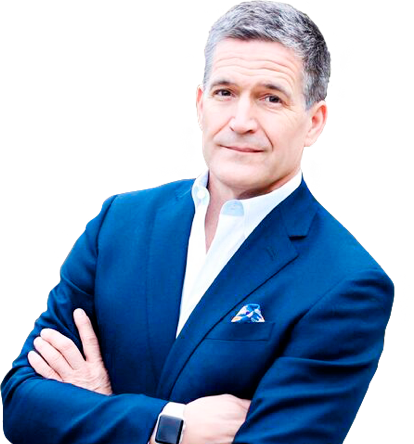
Miles Spencer is a prolific angel investor, media entrepreneur and explorer. He is best known for his role as co-host and co-creator of MoneyHunt, a reality based show where entrepreneurs pitch their ideas to a panel of experts.